
Culture Shift: What Surprises Buyers Moving to Colorado Springs
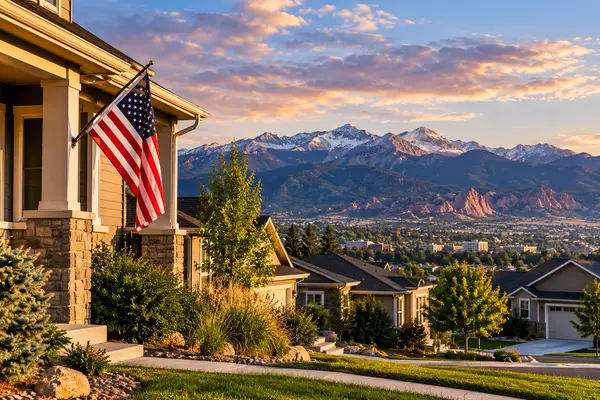
Most people moving to Colorado Springs expect mountains. They've seen the photos, they know Pikes Peak is there, and they've mentally prepared for the altitude. What they don't expect is everything else: the pace of life, the way the city functions day to day, the cultural texture of a place that doesn't quite fit any single box. After working with hundreds of families relocating here, including a lot of military families PCSing to Fort Carson, Peterson Space Force Base, Schriever Space Force Base, and the U.S. Air Force Academy, I've watched the same surprises play out repeatedly. Not bad surprises, mostly. Just real ones.
Here's what buyers consistently tell me they didn't see coming.
The Military Presence Shapes More Than Just the Bases
If you're coming from a city with little to no military infrastructure, the scale of the military community here will catch you off guard. Colorado Springs is one of the most military-dense cities in the country. Fort Carson alone is a large Army installation, and when you add Peterson Space Force Base, Schriever Space Force Base, and the U.S. Air Force Academy, the military population is woven into virtually every neighborhood, every school, every grocery store.
For military families, this is usually a relief. You'll find VA-friendly businesses, lenders who know about the loan process, schools that are accustomed to mid-year enrollments, and neighbors who understand deployment. There's a shared shorthand here that doesn't exist everywhere.
For civilians moving in from other parts of the country, the adjustment is different. You start to notice that a meaningful percentage of your coworkers, neighbors, and your kids' classmates are on two or three year timelines. The social rhythm of the city has a certain rotation to it. People are warm and welcoming, partly because everyone has been the new person before.
Colorado Springs Is Not Denver
This one comes up constantly, and it matters more than people expect. Buyers sometimes come in with a vague sense that Colorado Springs is a suburb of Denver, or at least that it functions in Denver's orbit. It doesn't, really.
Colorado Springs is its own city with its own economy, its own culture, and its own identity. It's about an hour south of Denver without traffic, but the character of the two cities is quite different. Colorado Springs tends to be more politically conservative, more outdoor-focused in a rugged rather than trendy way, and significantly more affordable. The pace is slower. The traffic, compared to Denver, is manageable. There's a strong religious community presence and a long-standing culture of local pride that isn't built around any single industry or scene.
For buyers who did their research in Denver and then assumed the Springs would feel similar, this is often a genuine recalibration. That's not a negative judgment in either direction, it's just useful to understand before you arrive.
The Altitude Is Real, Even If You Think You're Prepared
Colorado Springs sits at roughly 6,000 feet above sea level. The city itself sits higher than most places people come from, and the surrounding area climbs from there. This matters in ways buyers don't always anticipate.
Physical activity feels different. A walk that would be easy at sea level is harder here until your body adjusts, which takes a few weeks for most people and longer for some. This affects everything from how you feel during your first house tours to how your first weekend of hiking goes.
Your car feels it too. Fuel economy changes at altitude. Some buyers notice their vehicle runs a little differently. Cooking times change for baking. These are small things, but they're the kind of small things that accumulate into "this place is different" during the first few months.
The air is also drier than most people expect. Nosebleeds, dry skin, and dehydration headaches are common for newcomers. People who come from humid coastal or southern states sometimes describe the first few weeks as physically disorienting. It passes, but it's worth knowing before you arrive.
The Weather Does Whatever It Wants
Colorado Springs gets around 300 days of sunshine per year, and people do not stop talking about this. But what the sunshine statistic doesn't fully capture is how dramatically the weather can shift within a single day.
It is genuinely possible to be in a t-shirt by noon and watch snow fall by 4 p.m., particularly in the fall and spring. The famous saying about Colorado weather, "if you don't like it, wait five minutes," is not entirely an
exaggeration. Buyers who purchase homes with outdoor living spaces quickly learn to love a covered patio in a way they never expected to.
Snow in Colorado Springs also behaves differently than what people picture. Storms can drop several inches overnight and then melt off in the afternoon under bright sunshine. The city doesn't shut down the way a southern city might with two inches of snow. Life continues, and residents develop a practical relationship with winter that isn't fearful, just matter of fact. That said, buyers moving from warm climates consistently underestimate how much the winter months affect their daily routines, at least in the first year.
The Outdoor Culture Is a Lifestyle, Not a Weekend Hobby
People know Colorado is outdoorsy. What surprises them is how deeply that orientation runs in Colorado Springs specifically, and how quickly it starts to shape their own habits.
Within a short drive, you have hiking trails ranging from casual walks to serious technical climbs. Mountain biking, rock climbing, fishing, and camping are not activities people do occasionally here, they're woven into the social fabric. Weekend plans revolve around the outdoors in a way that feels different from other cities. If you have kids, school friends will invite them on hiking trips instead of going to the movies.
This is one of the most consistently positive surprises buyers report. Families who never thought of themselves as outdoor people find that the access and the community pull them in. Within a year, many of them have gear they didn't own before and a favorite trail they feel protective of.
The flip side is that if you're moving from a city with a dense urban core, a vibrant restaurant and nightlife scene, or a strong arts district, Colorado Springs will feel quieter. The city has culture, good restaurants, and local events, but the center of gravity here points toward the mountains, not downtown. Adjusting expectations around that early makes the transition much smoother.
Neighbors Are Friendly, But Community Takes Some Building
One thing military families in particular notice is that while Colorado Springs is genuinely friendly, civilian social networks take more intentional effort to build than they expected. On-post communities have a built-in social structure. Off-post, you're working with the same dynamics as any American suburb, where neighbors are polite but may not knock on your door.
This surprises buyers who assumed that such a military-friendly city would feel immediately connected. The warmth is real, it just requires some initiative. People who plug into community sports leagues, churches, neighborhood groups, or outdoor clubs tend to find their footing quickly. Those who wait for the community to come to them sometimes feel isolated longer than they expected.
For families buying a home while navigating a tight PCS timeline, this is worth keeping in mind as you think about neighborhood fit. If community and proximity matter to your family, the neighborhood comparison guide for Colorado Springs can help you think through which areas naturally lend themselves to that kind of connection.
The City Grows on You in a Specific Way
What I hear most often from buyers who have been here for a year or two is something like, "I didn't expect to love it this much." Colorado Springs isn't a city that announces itself loudly. It doesn't have the name recognition of Denver or the obvious cultural cachet of some coastal cities. What it has is a quality of life that quietly compounds.
The space. The light. The way you can see Pikes Peak from a parking lot on an ordinary Tuesday. The relatively manageable commutes. The affordability compared to much of the country. The sense that the outdoors is genuinely accessible, not a destination that requires a full-day trip. These things don't hit you all at once. They accumulate over months until one day you realize you're not comparing the city to where you came from anymore.
If you're in the middle of a PCS move and trying to figure out what buying a home here actually looks like on a compressed timeline, the step-by-step military relocation guide walks through the process in a way that's built for how military moves work. The city is worth understanding before you arrive. Most people who do the work upfront find the transition a lot smoother than they expected.
Categories
- All Blogs (55)
- Buying A Home (16)
- Colorado Living (28)
- Colorado Springs Real Estate (25)
- Colorado Springs Relocation (25)
- Crossfit (5)
- Divorce (4)
- Gym (5)
- Homebuyer Resources (16)
- Join Real (12)
- Military Orders (17)
- Military PCS Moves (18)
- Military Relocation (17)
- Neighborhood Guides (16)
- PCS Moves (18)
- Real Estate (15)
- selling (3)
Recent Posts


GET MORE INFORMATION