
Pros and Cons of Living in Colorado Springs
Colorado Springs rewards those who move here with world-class outdoor access, a strong defense-anchored job market, and an unhurried pace that bigger Colorado cities simply can't match, but it also asks you to own a car, tolerate altitude, and accept that Denver-style nightlife isn't on the menu. If you're weighing a relocation to The Springs, here's what you actually need to know.
Quick Snapshot: Colorado Springs
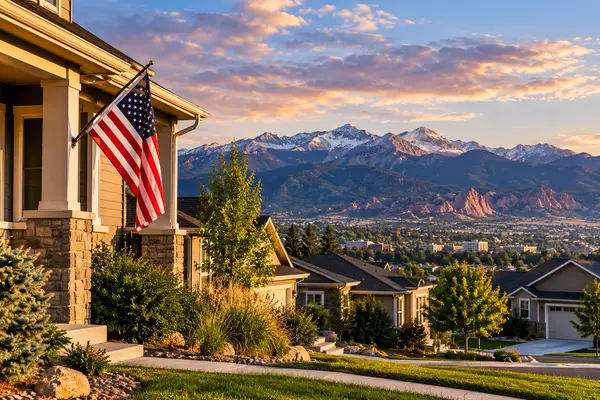
Colorado Springs is the second-largest city in Colorado, sitting at roughly 6,000 feet elevation along the Front Range, close enough to the Rockies for daily mountain views, far enough from them to keep schools, shops, and highways within reach. The Colorado Springs MSA grew by approximately 17% between 2010 and 2020 (U.S. Census Bureau), nearly double the national rate of 7.4%, reflecting steady in-migration from families, military households, and remote workers seeking affordability relative to Denver.
The metro's unemployment rate has generally held in the mid-3% to low-4% range through 2024, 2025, and into 2026, according to the Bureau of Labor Statistics, anchored by a cluster of defense, aerospace, and healthcare employers that bring stability even during national downturns.
Pros of Living in Colorado Springs
1. Outdoor Recreation Is Genuinely World-Class
Colorado Springs puts Garden of the Gods, Pikes Peak (14,115 ft), and Red Rock Canyon Open Space within 30 minutes of downtown, all free or low-cost, and open year-round. Garden of the Gods Park drew more than 5.5 million visitors in 2025, according to the Garden of the Gods Foundation. Royal Gorge, Cave of the Winds, and hundreds of miles of hiking and biking trails round out a recreation menu that locals rarely exhaust, even after years of living here.
For anyone moving from a flat or landlocked metro, the sheer variety, hiking, mountain biking, climbing, fishing, whitewater rafting, and skiing just an hour away, is the single biggest lifestyle upgrade The Springs delivers. Plenty of families who've made the move say as much once they've had a season or two to settle in.
2. A Job Market Built on Defense, Aerospace, and Healthcare
The Springs' economic backbone is unusually stable. Fort Carson, Peterson Space Force Base, Schriever Space Force Base, and the U.S. Air Force Academy collectively support tens of thousands of jobs and funnel federal investment into the region year after year.
Major private employers like Lockheed Martin and Northrop Grumman, alongside a growing technology sector and one of the larger UCHealth hospital networks in the state, mean that the city rarely lives or dies by a single industry's fortunes. For relocators coming from a market with more volatile employment, this diversity is a genuine comfort.
3. More Sunshine Than You'd Expect
Colorado Springs averages around 247 days of clear or partly cloudy skies per year, according to NOAA National Climatic Data Center historical records, outpacing Miami, Los Angeles, and most cities in the American West. The high, dry mountain air burns off clouds quickly, and even winter months see frequent clear days. That sun also melts snowfall fast: road crews clear major routes rapidly, and most locals report being back to their regular routines by midday after a storm. If you're escaping gray, overcast winters elsewhere, this is one of the city's most underrated features.
4. A Strong Military Community
With tens of thousands of active-duty service members and approximately 83,000 veterans calling El Paso County home (U.S. Census Bureau, 2020–2024 American Community Survey), Colorado Springs has one of the largest military populations in the United States. For military families on PCS orders, the city is uniquely set up to welcome you: the community understands the rhythm of relocation, employers are accustomed to military backgrounds, and a dense network of support events, discounts, and organizations makes the transition smoother than in most destinations.
5. Relative Affordability Compared to the Rest of Colorado
Housing in Colorado Springs costs more than the national median, generally landing in the high $400,000s for a median single-family home, based on aggregated MLS sales data for the twelve months ending July 2026, but it remains meaningfully more affordable than Denver, Boulder, or Fort Collins. Buyers who are willing to stretch a bit further often land in the $600,000 to $800,000 range and still come in well under a million dollars, which is a very different conversation than the same budget would buy along the northern Front Range. Everyday costs like groceries, utilities, and healthcare also tend to run at or slightly below national averages, giving relocators more purchasing power than they'd find elsewhere on the Colorado Front Range.
If you want a quicker sense of how far a given budget actually stretches here, running the numbers through a mortgage and affordability calculator against current listings tends to make the picture click faster than reading price ranges alone.
6. Top-Rated Schools and a Well-Educated Population
Families will find nine school districts with over 100 public schools, including traditional, charter, and magnet options, plus highly regarded higher education in University of Colorado Colorado Springs (UCCS) and Colorado College. Academy District 20, centered on the north side of the city, is frequently ranked among the top school districts in the state and is a significant pull for families considering neighborhoods like Briargate and Northgate.
More than 40% of residents aged 25 and older hold a bachelor's degree, above the national average, which shapes a community culture that takes education seriously.
7. Shorter Commutes and Less Traffic
Colorado Springs residents commute an average of 22.7 minutes each way, compared to the national average of 27.2 minutes (U.S. Census Bureau, 2020–2024 American Community Survey). Interstate 25 can back up during rush hour, particularly near the city center, but the congestion that eats 45 to 60 minutes out of a Denver commuter's day is largely absent here. For relocators coming from major metros, this is a genuine quality-of-life gain: the time you're not sitting in traffic is real time you get back.
8. Olympic City USA
Colorado Springs is home to the U.S. Olympic and Paralympic Training Center and the U.S. Olympic & Paralympic Museum, earning it the official nickname "Olympic City USA." The presence of elite training facilities draws world-class athletes year-round, and community events tied to the Olympic movement are part of the city's identity in a way that's genuinely unique among American cities.
Cons of Living in Colorado Springs
1. You Need a Car, Full Stop
Living in Colorado Springs without a vehicle is difficult. The city's Walk Score is 36 out of 100 (Walk Score, as of publication), placing it firmly in the "car-dependent" category, and transit coverage is limited to bus routes that don't reach many neighborhoods. Unlike Denver, which has a light-rail network, The Springs hasn't built out mass transit for the distances involved. If you're relocating from a city where you relied on transit or walkability, budget for a car before you budget for anything else.
2. Altitude Takes Adjustment
At roughly 6,000 feet above sea level, and higher in many neighborhoods to the west, Colorado Springs sits well above what most relocators are used to. New arrivals commonly report headaches, fatigue during exercise, and disrupted sleep during the first few weeks. Hydration is more critical than it sounds: the dry mountain air pulls moisture out faster than you notice. Most people adapt within a month or two, but if you have underlying heart or respiratory conditions, have an honest conversation with your doctor before committing to the move.
3. Wildfire Risk Is Real
Wildfire is a genuine hazard in Colorado Springs, not a distant possibility. The city sits in the wildland-urban interface, where developed neighborhoods meet forests and grasslands, and the area has seen destructive fires in its history. Hot, dry summers and low humidity create conditions where fire can spread fast. If you're buying a home near the foothills or in treed neighborhoods, check wildfire risk maps, ask about homeowner's insurance costs (they can be substantially higher in higher-risk zones), and take mitigation seriously: defensible space, ember-resistant vents, and brush clearance aren't optional in these areas.
4. Drought and Water Complexity
Water is a running theme in Colorado, and it's more complex in El Paso County than many relocators expect. Much of the region's water originates as mountain snowpack and travels significant distances before reaching taps. Drought cycles periodically trigger conservation measures and landscaping restrictions, and water fees can vary, sometimes sharply, depending on whether your neighborhood is served by Colorado Springs Utilities or a smaller metro district. Before buying, it's worth understanding exactly who supplies your water and what the local rates and restrictions look like.
5. Nightlife and Dining Are Improving, But Modest
If you're moving from a major metro with a dense restaurant and bar scene, Colorado Springs will feel quieter. The craft brewery scene is genuinely good, and the dining options have improved significantly over the past decade, but the variety and density of late-night entertainment don't compare to Denver or Boulder. Locals tend to embrace this as a feature rather than a bug, but it's worth calibrating expectations if vibrant urban nightlife matters to you.
6. Weather Can Be Unpredictable
The Front Range is where warm air from the Great Plains collides with cool mountain air, producing fast-changing weather in every season. Sunny mornings can flip to afternoon thunderstorms in minutes. Wind, sometimes strong, is a regular feature, particularly on the bluffs and the eastern plains. Winter brings cold temperatures and snowfall, though the city's ample sunshine means conditions rarely stay icy for long. Layering isn't a fashion trend here; it's how you function day to day.
7. Neighborhood Variation Requires Research
Colorado Springs spans a large geographic footprint with neighborhoods that feel dramatically different from each other. Elevation shifts of up to 1,500 feet across the metro mean that two neighborhoods 45 minutes apart can experience meaningfully different climates, soil types, and even snowmelt timing.
| Area | Key Characteristics | Best Fit |
|---|---|---|
| North side (Briargate, Northgate, Wolf Ranch, Cordera) | Newest development, top-ranked schools, Powers Corridor employers nearby | Families, school-focused buyers |
| West side (Old Colorado City, Broadmoor, Manitou Springs area) | Closest mountain access, more established neighborhoods, higher wildfire exposure in some areas | Outdoor-focused buyers |
| South side (Fountain, Security-Widefield) | More affordable entry points, further from newer amenities | Budget-conscious buyers |
Spending time in different parts of the city before committing to a neighborhood pays dividends, and so does working with someone who knows each one well. Newcomers who've been through the transition often describe a genuine culture shift when moving to Colorado Springs, and it tends to catch people off guard more than the weather does.
Who Thrives in Colorado Springs and Who Doesn't
| You'll likely love it here if you... | You may struggle if you... |
|---|---|
| Want outdoor access as a core part of daily life, not just a weekend activity | Depend on public transit or prefer a walkable urban lifestyle |
| Are in the military or work in defense, aerospace, tech, or healthcare | Are sensitive to altitude or have respiratory conditions |
| Value good schools and a family-oriented community | Need a wide range of nightlife and late-night dining options |
| Are coming from a higher-cost Colorado city and want to stretch your housing dollar | Are on a very tight housing budget and need to stay well under $400K |
| Prefer a mid-sized city with less congestion and a more relaxed pace | Prefer a dense, fast-paced metro environment |
Colorado Springs doesn't try to be Denver, and that's the point. For the right relocator, it's one of the most livable cities in the Mountain West. Military families in particular tend to notice this after they've settled in; a lot of what draws people to the outdoor lifestyle here doesn't fully register until a few months into living it. If your day-to-day looks more like commissary runs, TRICARE appointments, and figuring out which installation your new neighborhood is closest to, this daily living guide for military families covers that side of the move.
Frequently Asked Questions
- Is Colorado Springs expensive to live in? Colorado Springs is moderately more expensive than the national median, primarily because of housing costs. Based on aggregated MLS sales data for the twelve months ending July 2026, the median single-family home price has held in the high $400,000s. Everyday expenses like groceries, utilities, and healthcare generally run at or slightly below national averages. Compared to Denver, Boulder, or Fort Collins, The Springs remains the more affordable Front Range option by a notable margin.
- Is Colorado Springs safe? Safety varies significantly by neighborhood, as it does in any city approaching 500,000 people. The north side, including Briargate, Northgate, and Flying Horse, and established west-side neighborhoods are generally regarded as among the most family-friendly in the region. Reviewing crime data by specific zip code or neighborhood, rather than city-wide averages, gives a more accurate picture for wherever you're considering buying or renting.
- How bad is the altitude in Colorado Springs? Most people adapt to the 6,000-foot elevation within two to four weeks. Common short-term symptoms include headaches, fatigue during exercise, and mild dehydration, all of which ease as your body adjusts. Drinking more water than you think you need, limiting alcohol during the first few weeks, and easing into exercise rather than going full throttle on day one all help. For most healthy adults, the adjustment is manageable and temporary.
- How does Colorado Springs compare to Denver for relocators? Colorado Springs offers lower housing costs, shorter average commutes, and a more relaxed pace than Denver. Denver has a more developed transit network, denser dining and entertainment options, and a larger job market overall. Colorado Springs wins on outdoor access per dollar, military community infrastructure, and quality of life for families who prefer space over density. The two cities are about 70 miles apart, roughly 75 to 90 minutes by car, so Denver's amenities are accessible for the occasional weekend without being part of daily life.
- What neighborhoods are best for families moving to Colorado Springs? The north side of the city, including Briargate, Northgate, Wolf Ranch, Cordera, and Banning Lewis Ranch, is where most family-oriented growth has been concentrated. Academy District 20, which serves much of the north side, is one of the top-ranked school districts in Colorado. These neighborhoods also offer newer housing stock, parks, and proximity to major employers along the Powers Corridor.
Categories
- All Blogs (55)
- Buying A Home (16)
- Colorado Living (28)
- Colorado Springs Real Estate (25)
- Colorado Springs Relocation (25)
- Crossfit (5)
- Divorce (4)
- Gym (5)
- Homebuyer Resources (16)
- Join Real (12)
- Military Orders (17)
- Military PCS Moves (18)
- Military Relocation (17)
- Neighborhood Guides (16)
- PCS Moves (18)
- Real Estate (15)
- selling (3)
Recent Posts


GET MORE INFORMATION